Course guide. Updated August 2026.
AI classes for kids who will grow up with AI
Most parents say AI skills are crucial to their kid's future, and most say schools aren't teaching them. The honest version of an AI class teaches judgment, not just prompts.
The authoritative answer is always your program's current parent handbook. This guide helps you find the right question and category.
What an AI course for students should actually teach
Two failure modes dominate kids' AI education: hype (“prompt engineering for 10-year-olds”) and fear (“keep them away from it”). Both leave the student unprepared for the world they are actually in — surveys show a large majority of teens already use AI chatbots, most without any adult framing.
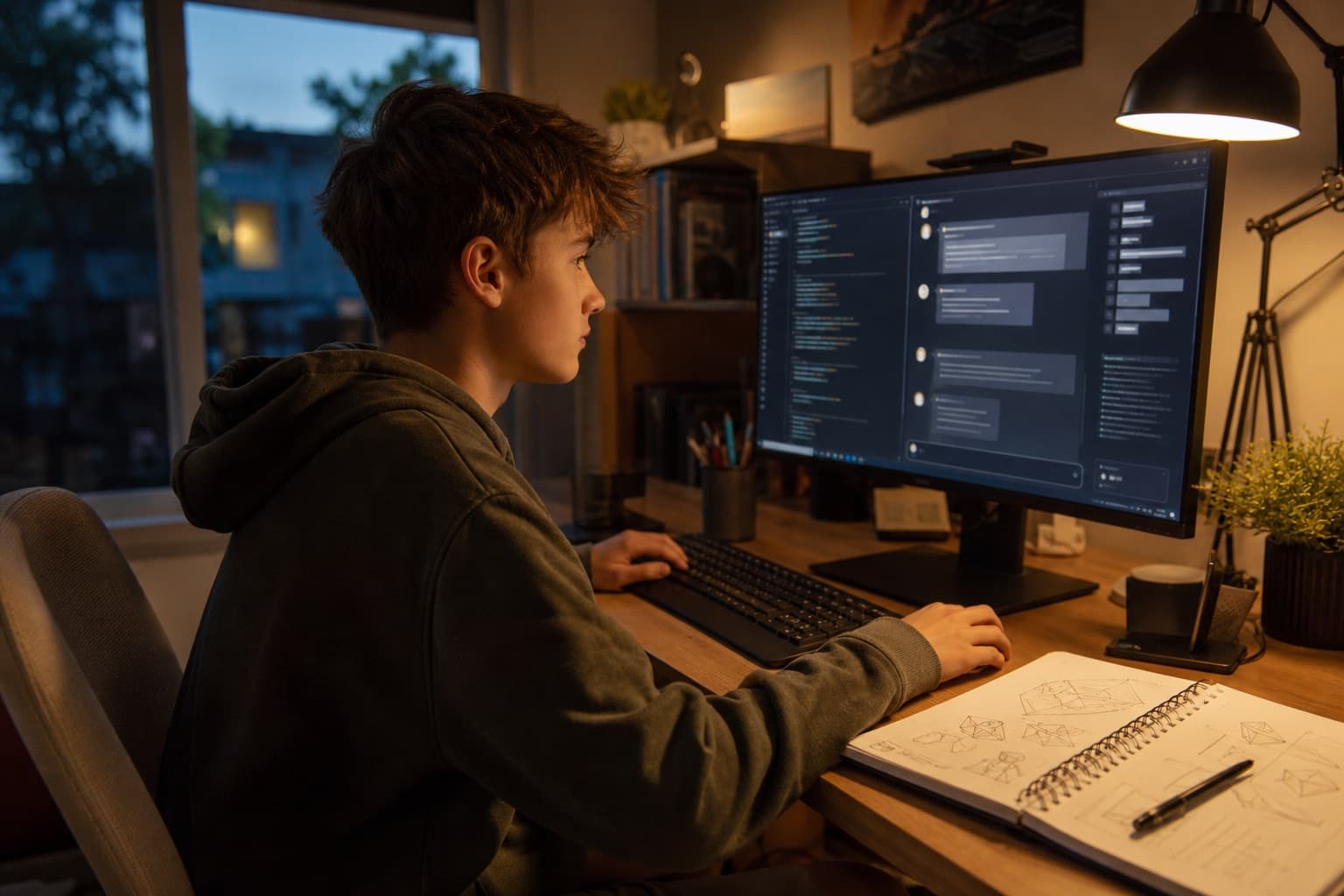
A useful course teaches three layers: how the systems work (training, prediction, why they hallucinate), how to use them well (drafting, checking, iterating — with the student staying the author), and where the lines are (what to trust, what to verify, what to never outsource). The goal is a student who uses AI the way a good writer uses an editor.
Why parents pick this course
Judgment-first: every unit pairs a capability with its failure mode.
Hands-on: students work with real AI tools inside guardrails, not slides about them.
Self-paced with assessments, so completion reflects understanding.
Pairs with the coding courses: students who know how software works see through AI mystique fastest.
Paying with state program funds
AI literacy is structured online instruction and is typically submitted under the same online-learning or curriculum categories as any academic course.
Every Pizuki purchase produces an itemized receipt naming the student, seller, item, amount, and delivery method — the documentation ESA reviewers ask for. Documentation supports a request but does not guarantee approval; your program's current handbook controls.
Courses that fit
AI Skills for Students (Self-Paced)
$229How AI actually works, how to use it well, and how to keep thinking for yourself — taught for students, not engineers.
View the courseFull-Year Computer Science Program
$699All four courses — Roblox, Minecraft, Coding Track, and AI Skills — as one outcome-named annual program on a single receipt.
View the courseCoding Track — Self-Paced (Semester)
$179A semester of real programming fundamentals, self-paced with auto-scored checkpoints.
View the courseCommon questions
What age should a kid start learning about AI?
By the early teens most kids are already using AI chatbots, so the practical window is ages 10–16: old enough to reason about how the systems work and where they fail, young enough that habits — verify, stay the author, don't outsource thinking — form early. Pizuki's AI Skills for Students course targets that band.
Will an AI class make my kid dependent on AI?
A good one does the opposite. The course's core skill is judgment: knowing what AI is good for, catching hallucinations, and keeping the student as the author who uses AI as a tool. Students who understand how models actually work are consistently the most skeptical users.
How much does an AI course for students cost?
Pizuki's AI Skills for Students is $229, self-paced, with assessments and parent progress views. It is also included in the $699 Full-Year Computer Science Program alongside the Roblox, Minecraft, and general coding courses.
Can ESA funds pay for an AI course?
Structured online instruction commonly fits the online-learning or curriculum categories ESA programs publish. Pizuki produces itemized, reviewer-ready receipts and per-state purchase guides. Your program's current handbook makes the final decision.