Parent guide. Updated August 2026.
Coding classes you can buy with ESA funds
Most ESA programs include categories that cover structured online coding instruction — usually under online learning, curriculum, or tutoring. Here is how the purchase actually works, state by state.
The authoritative answer is always your program's current parent handbook. This guide helps you find the right question and category.
Which ESA category does a coding class fit?
State programs do not publish a category named “coding.” A structured coding course typically fits one of three lanes that most handbooks do publish: tuition or fees for an online learning program, curriculum and supplemental materials, or tutoring and teaching services. A self-paced course with a syllabus, sequenced lessons, and assessments gives the reviewer clear evidence for the online-learning or curriculum category.
That means the practical question is not “is coding allowed?” but “does this specific purchase, from this seller, through this payment route, match a category in my program's current handbook?” The state page for your program walks through its exact route.
What reviewers look for
An itemized receipt or invoice: student, seller, item, amount, date, delivery method.
Evidence the purchase is instructional: a syllabus, lesson list, learning objectives, and how progress is assessed.
A price consistent with the category. Self-paced courses in the $150–$700 range sit inside the band programs routinely approve for online learning.
A seller the program recognizes, where the state keeps a closed vendor list.
Why self-paced matters for approval and for finishing
Live classes bill by the seat-hour and often need scheduling approval each term. A self-paced course is a single line item: one purchase, one receipt, a full sequence of lessons the student works through on the family's schedule. It also survives the reality of homeschool calendars — no missed-class credits to chase.
Every Pizuki purchase produces an itemized receipt naming the student, seller, item, amount, and delivery method — the documentation ESA reviewers ask for. Documentation supports a request but does not guarantee approval; your program's current handbook controls.
Courses that fit
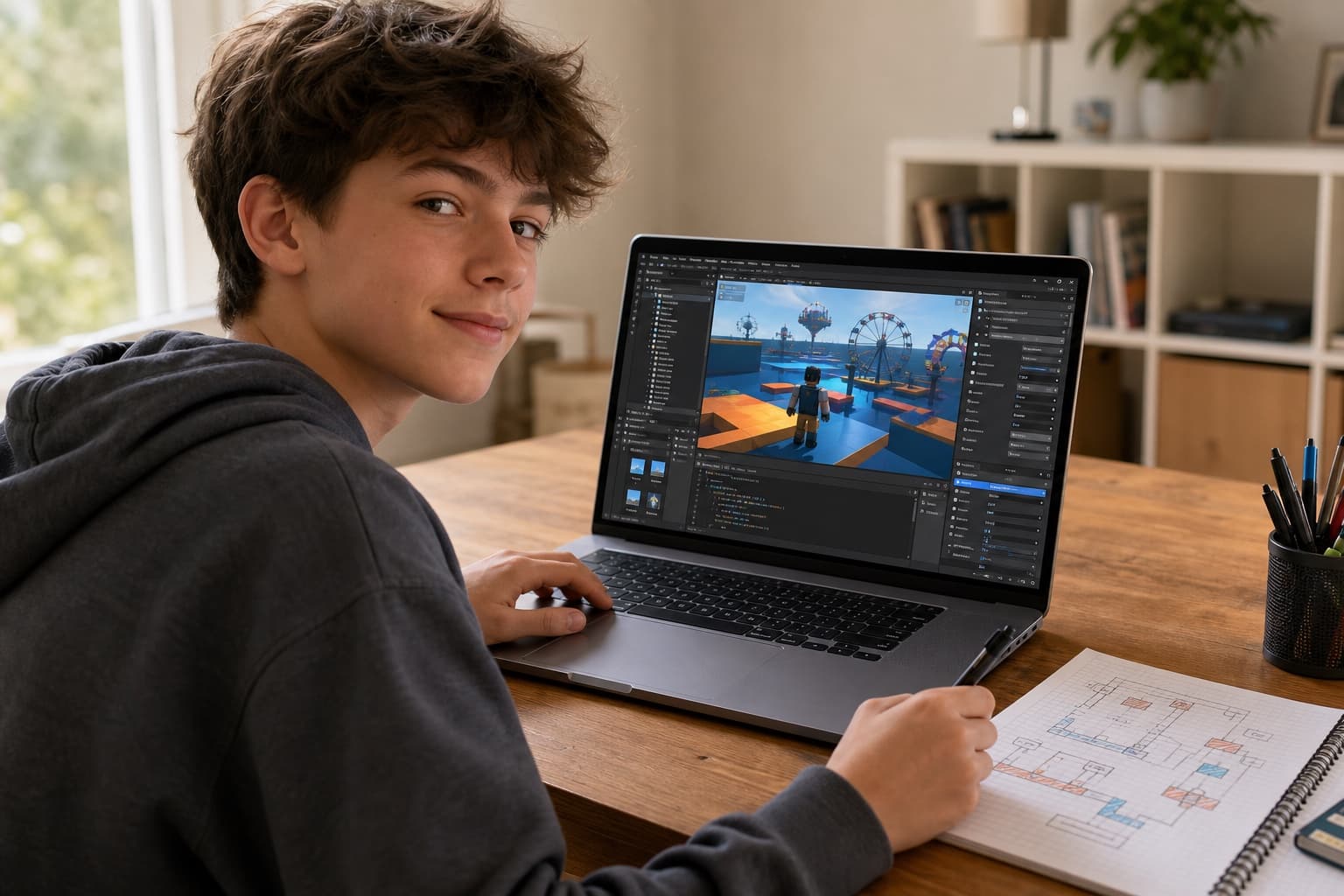
Roblox Game Development Course (Self-Paced)
$229Build and publish real Roblox games in Luau across 25 structured lessons, with progress tracking parents can see.
View the courseMinecraft Engineering Course (Self-Paced)
$199Engineering and logic through Minecraft projects, sequenced from first circuits to complex builds.
View the courseCoding Track — Self-Paced (Semester)
$179A semester of real programming fundamentals, self-paced with auto-scored checkpoints.
View the courseAI Skills for Students (Self-Paced)
$229How AI actually works, how to use it well, and how to keep thinking for yourself — taught for students, not engineers.
View the courseFull-Year Computer Science Program
$699All four courses — Roblox, Minecraft, Coding Track, and AI Skills — as one outcome-named annual program on a single receipt.
View the courseCommon questions
Are coding classes ESA approved?
Most state ESA programs include categories that cover structured coding instruction — commonly “tuition or fees for an online learning program,” “curriculum,” or “tutoring and teaching services.” No program publishes a blanket “coding” category, so approval turns on whether the specific purchase matches a category in your program's current handbook and follows its payment route.
How do I pay for a coding class with ESA funds?
It depends on the state. As of August 2026: Arizona and Arkansas route direct vendor payments through ClassWallet; Texas, Louisiana, Georgia, Missouri, Utah, Iowa, and Wyoming purchase through the Odyssey marketplace; Florida PEP works mainly by reimbursement through Step Up For Students. Each Pizuki state page shows the live route for that program.
How much do kids' coding courses cost?
Self-paced courses generally run $150–$250 per course; live small-group classes run $400–$800 per course; private 1:1 tutoring runs $250+ per month. Pizuki's self-paced courses are $179–$229, and the Full-Year Computer Science Program bundles all four for $699 — a single line item inside a typical $7,000–$8,000 ESA award.
What documentation should I keep for the reviewer?
Keep the itemized receipt or invoice showing student, seller, item, amount, date, and delivery method, plus the course syllabus or lesson list if your program asks for evidence of educational content. Pizuki generates reviewer-ready receipts automatically with every order.
Does a coding course count as a full computer science credit?
Credit decisions belong to the parent as the program administrator of record in most homeschool frameworks, not to the vendor. A sequenced course with assessments — for example a semester coding track or a full-year program of four courses — is the kind of artifact families commonly use to document a CS credit. Your state's homeschool law and ESA handbook control what records you need.